


Adapting materials for mixed ability class


While working with groups of students teachers often have to deal with mixed ability classes. In most cases, teachers follow the book but at the same time, they need to adapt materials. A good rule of thumb is to grade the task, not the text. Let’s look at some practical tips on how we can adapt tasks for Elementary students.
Reading
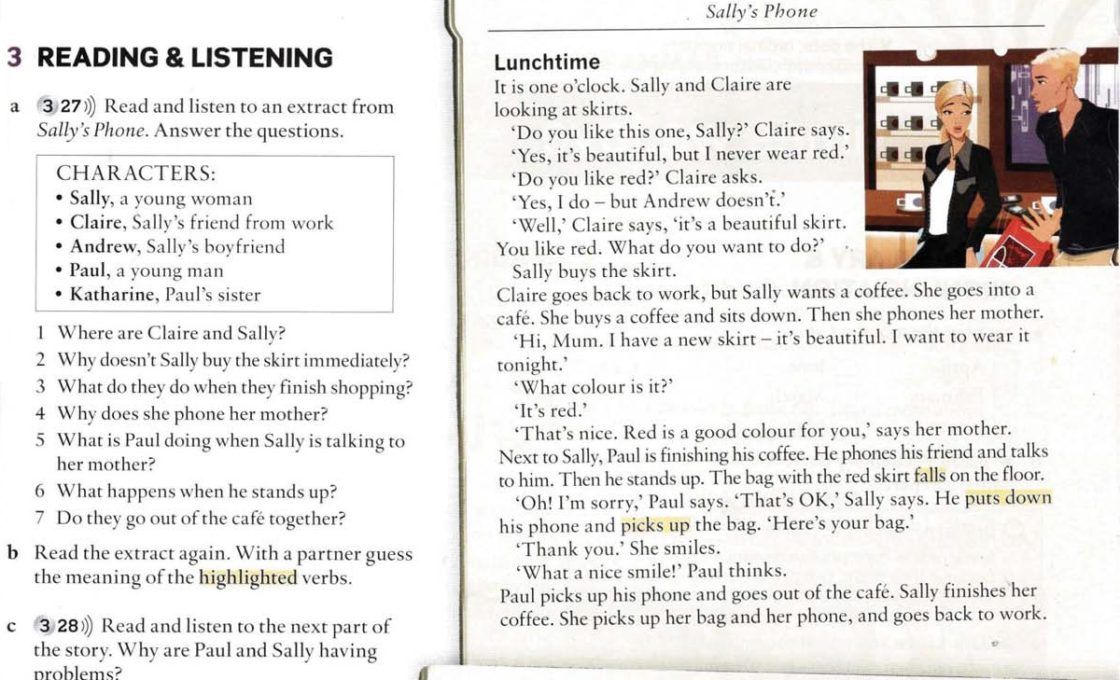
For weaker students:
- Pre-teach difficult vocabulary (use visuals to explain meaning), give out worksheets with this vocabulary or leave it written on the board for students to refer to.
- Discuss the title, brainstorm the vocabulary connected to the word “phone” (to phone, to say, to talk, to pick up etc.) picture, predict what the story is about, what might happen and why.
- Change the task 3a and add options as it is less challenging for students (Where are Claire and Sally? cafe/shop). Allow students to choose which version they would like to do. OR give answers on cards to match to questions, for example — it’s red, a shop, go to a cafe, etc.
- Organize jigsaw reading — split the text into parts and give the option of only reading some of the text.
For stronger students:
- Ask to explain their choice, underline sentences or keywords which help to find the answer.
- Ask early finishers to find new words and find definitions to them in the dictionary.
- Ask to choose five words and write synonyms or antonyms, e.g. “good”.
- Ask to rewrite a part of the text in a different tense/person.
- Ask to make questions about the text.
- Ask to write their personal opinion/a short summary of the text.
Listening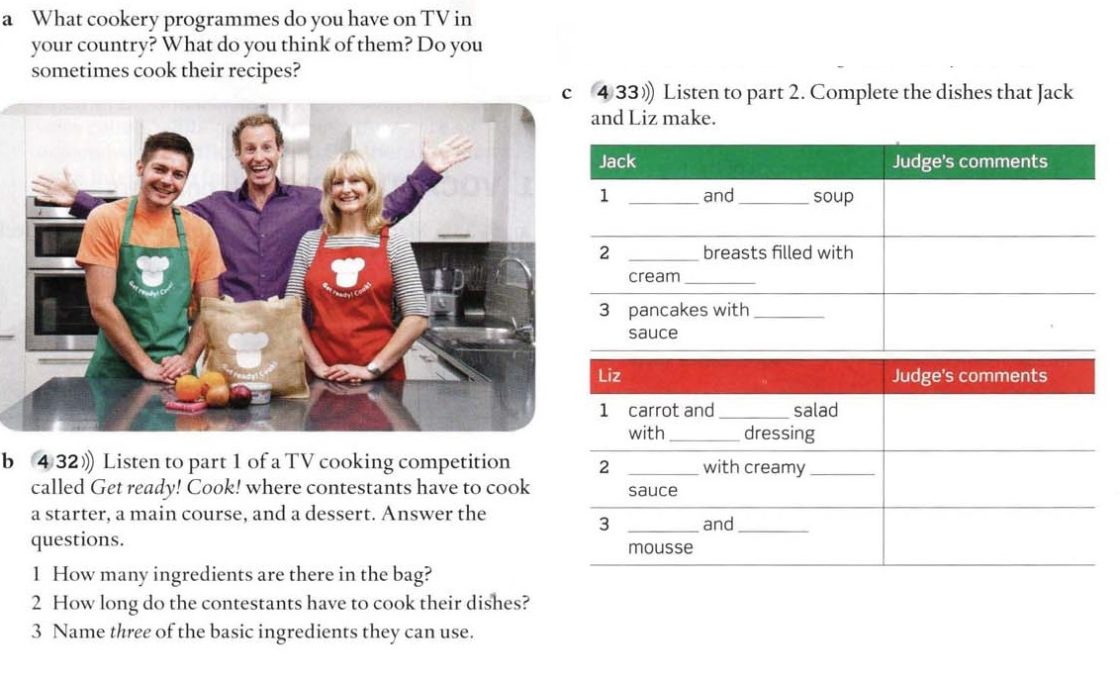
New English file, 3rd edition, Student’s book, Unit 9A For weaker students:
- Follow the same tips as for reading (pre-teach vocabulary, discuss the picture, brainstorm the vocabulary, add options to the questions).
- Give the tapescript on second listening.
- Give time to compare the answers in pairs.
For stronger students:
- Ask to explain their choice.
- Ask to listen and write down difficult word and phrases.
- Add the number of question to the listening task.
- Give the tapescript and ask to mark intonation, write the transcription to some words or phrases.
- If it’s a true/false activity, follow on by asking ‘why/why not?)
Writing

New English file, 3rd edition, Student’s book, Unit 10A For weaker students:
- Provide more prompts (examples or models, a list of words to use or models of relevant grammar).
- Reduce the output (the number of words).
- Maximize students’ time on task.
- Correct the draft together.
- Encourage to use the dictionary but not the translator.
- Adjust the output and give a text with blanks for student to complete.
- Grade students on the effort they make rather than their ability.
For stronger students:- Increase the word limit.
- Indicate mistakes using correction code to give students a chance to self-correct. (Sp = spelling, Gr = grammar etc.). Indicate where they could use more interesting ways of saying something.
- Ban easy words.
- Encourage peer-assessment.
- Expand the input, ask to write about the location of the town/city and its facilities.
Speaking

New English file, 3rd edition, Student’s book, Unit 6C and 7C For weaker students:
- Follow the same tips as for writing (provide more support, grade the effort)
- Picture A is perfect for weaker students, but the task for picture B might be changed. Write down the whole question, break it down into parts, ask to put the words in the correct order and ask the partner.
- Give more time for thinking and planning. Allow to make and use notes. Give students time to rehearse and gather their ideas before a role play or discussion.
- Pair with a student of the same level.
For stronger students:- Follow the same tips as for writing (ban easy words, increase word limit, pair with a student of the same level so that they have a profound discussion).
- Give just the keywords (like in picture B) and encourage to provide extended answers with arguments/examples to support their point of view.
- Get students to record themselves and self-correct.
It’s important to remember that every student should get something out of the class, but not necessarily the same things as others. Provide more support to weaker students and offer a challenge, extension activities for stronger ones.Have great lessons!

Понравилась статья? Подпишитесь и получайте свежие материалы прямо на почту!


 Маргарита Аветисян
 Вероника Аветисян